Chargeback Management Services - Dispute Response May/ 29/ 2026 | 0
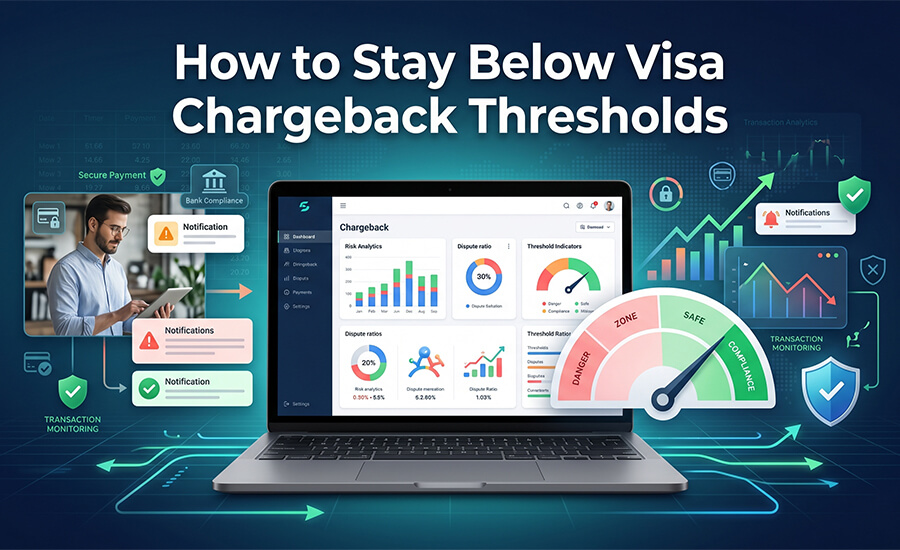
How to Stay Below Visa Chargeback Thresholds
Chargebacks can hurt any business. One or two disputes may look small. But when they grow, they can create serious payment problems.
Visa tracks disputes and fraud very closely. If your business crosses Visa chargeback thresholds, your merchant account may face monitoring, fees, payment holds, or even termination.
That is why every online business must take chargebacks seriously.
The good news is simple. You can reduce chargebacks before they become a crisis. You need the right process, clear customer communication, strong fraud checks, and fast dispute action.
Dispute Response helps businesses manage disputes and reduce chargeback risk before it becomes too expensive.
What Are Visa Chargeback Thresholds?
Visa chargeback thresholds are limits that help Visa identify merchants with too many disputes or fraud cases.
Visa now uses a program called VAMP, which stands for Visa Acquirer Monitoring Program. This program looks at fraud and dispute activity together. It checks how many fraud reports and disputes a merchant gets compared to settled transactions.
In simple words, Visa wants to know this: Are too many customers disputing payments from your business?
If the answer is yes, your business may get flagged.
This can create pressure from your payment processor. Your processor may ask for a chargeback reduction plan. They may increase reserves. They may charge extra fees. They may also close your account if the risk stays high.
So, staying below Visa chargeback thresholds is not optional. It is a key part of keeping your payment processing healthy.
Also Read: Stop Losing Money! How to Reduce Friendly Fraud in Your Business
Why Businesses Cross Visa Chargeback Thresholds
Most businesses do not cross thresholds overnight. Chargebacks usually build up because of repeated issues.
Some customers may not recognize your billing name. Some may forget they bought from you. Some may be unhappy with delivery. Some may claim fraud. Some may contact the bank instead of contacting your support team.
Fraud can also cause disputes. This happens when stolen card details are used on your website. Later, the real cardholder files a chargeback.
Other chargebacks come from unclear refund policies, weak customer service, subscription confusion, delayed shipping, poor product descriptions, or aggressive sales claims.
The problem is not always one big mistake. It is often many small mistakes repeated over time.
Start With Clear Billing Descriptors
A billing descriptor is the name customers see on their card statement.
If customers do not recognize your billing name, they may think the charge is fraud. Then they may call the bank. This can become a chargeback.
Your billing descriptor should match your brand name as closely as possible. If your legal company name is different from your website name, ask your processor if you can use a clearer descriptor.
You should also mention the billing name on your checkout page, thank-you page, and order confirmation email.
This small step can prevent many “I do not recognize this charge” disputes.
Make Customer Support Easy to Reach
Many chargebacks happen because customers feel ignored.
If a customer cannot reach you, they may go straight to their bank. That turns a normal support issue into a chargeback.
Your website should show your email address, phone number, live chat, or support form clearly. Do not hide contact details. Do not make customers search for help.
Reply fast. Even a short reply can help. Tell the customer that you received their request. Give them a clear timeline.
Fast support can stop disputes before they start.
Dispute Response recommends treating support as a chargeback prevention tool, not just a customer service task.
Use Simple Refund and Return Policies
Confusing refund policies create disputes.
Your refund policy should be easy to read. It should explain who can get a refund, how long refunds take, and what conditions apply.
Do not use long legal language if customers cannot understand it. Use short sentences. Keep the policy visible before checkout.
A fair refund is often cheaper than a chargeback. A chargeback can cost you the sale, the product, the fee, and your payment reputation.
If a refund is the right choice, process it quickly.
Also Read: What Happens When You Don’t Respond to a Chargeback?
Send Strong Order Confirmation Emails
A good order confirmation email can reduce chargeback risk.
Send the customer a receipt right after purchase. Include the product name, order number, amount paid, billing descriptor, delivery details, support contact, and refund policy link.
For subscription businesses, include renewal dates and cancellation instructions. Many subscription chargebacks happen because customers forget the billing date.
Clear emails build trust. They also create useful evidence if a dispute happens later.
Improve Product Pages
Your product pages should set the right expectations.
Use clear product descriptions. Show real images. Mention size, features, limits, delivery time, and any important conditions.
Do not overpromise. Do not use misleading claims. Do not make the product look better than it is.
When the customer receives what they expected, they are less likely to dispute the payment.
Many chargebacks begin with disappointment. Better product pages reduce that disappointment.
Use Fraud Prevention Tools
Fraud is one of the biggest reasons businesses cross Visa chargeback thresholds.
Use fraud filters to check risky orders. Look at mismatched billing and shipping details. Watch for multiple orders from the same IP address. Review large orders from new customers. Check failed payment attempts.
Tools like AVS, CVV checks, 3D Secure, device tracking, velocity rules, and risk scoring can help reduce fraud.
Do not approve every order blindly. Some sales are not worth the risk.
A strong fraud process can protect your business from expensive chargebacks.
Track Chargeback Reasons Every Week
You cannot fix what you do not track.
Review chargebacks every week. Look at the reason codes. Group them into simple categories like fraud, product issue, shipping issue, refund issue, duplicate billing, or subscription confusion.
Then find the pattern.
If many disputes mention delivery, improve shipping updates. If many mention refunds, fix your refund process. If many mention fraud, tighten fraud checks. If many mention product quality, improve descriptions or product control.
Chargeback prevention works best when it is based on real data.
Dispute Response helps businesses understand dispute patterns and build better prevention plans.
Also Read: How Merchants Can Reduce Chargebacks by 80% Before Losing More Revenue
Use Chargeback Alerts
Chargeback alerts can give your business a chance to fix a problem before it becomes a full chargeback.
When an alert arrives, you may be able to refund the customer before the dispute moves forward. This can protect your chargeback ratio.
Alerts are not a full solution. But they can be very useful for businesses that get regular disputes.
A smart chargeback strategy uses alerts, fraud tools, support improvements, and strong evidence.
Fight the Right Chargebacks
You should not fight every chargeback. But you should fight the right ones.
Some disputes are valid. In those cases, a refund or acceptance may be better. But some disputes are friendly fraud. This happens when a customer bought the product but later claims they did not.
For these cases, you need strong evidence. This may include order details, customer emails, IP address, delivery proof, signed terms, login history, usage records, refund policy acceptance, and previous purchase history.
A strong response can help you recover revenue. It can also show that your business takes disputes seriously.
Dispute Response can help create organized dispute evidence so your business has a better chance of winning valid representments.
Keep Your Chargeback Ratio Below the Danger Zone
Do not wait until you cross Visa chargeback thresholds.
Set your own internal limit. Your internal limit should be lower than Visa’s limit. This gives you time to act before your processor contacts you.
Review your dispute ratio every month. Review your fraud count. Review your refund rate. Review customer complaints.
If your numbers start rising, act quickly.
Chargebacks are easier to prevent early. They are harder to fix after your business enters monitoring.
Train Your Team
Your team plays a big role in chargeback prevention.
Customer support should know how to handle angry customers. Fulfillment should know how to confirm delivery. Marketing should avoid misleading claims. Finance should track refunds and disputes. Management should review chargeback trends.
Everyone should understand one simple rule. A chargeback is not just a lost sale. It is a warning sign.
When your team treats chargebacks seriously, your business becomes safer.
Staying below Visa chargeback thresholds requires daily attention. You need clear billing, fast support, simple refund rules, strong fraud checks, honest product pages, and regular dispute tracking.
You also need to act before the problem grows.
Visa monitoring can be stressful. But your business can reduce risk with the right systems.
Dispute Response helps businesses manage chargebacks, understand dispute patterns, and build stronger prevention strategies.
If you want to protect your merchant account, start now. Do not wait for Visa or your processor to warn you. Reduce chargebacks today, protect your revenue, and keep your payment processing stable.