Chargeback Management Services - Dispute Response Apr/ 7/ 2026 | 0
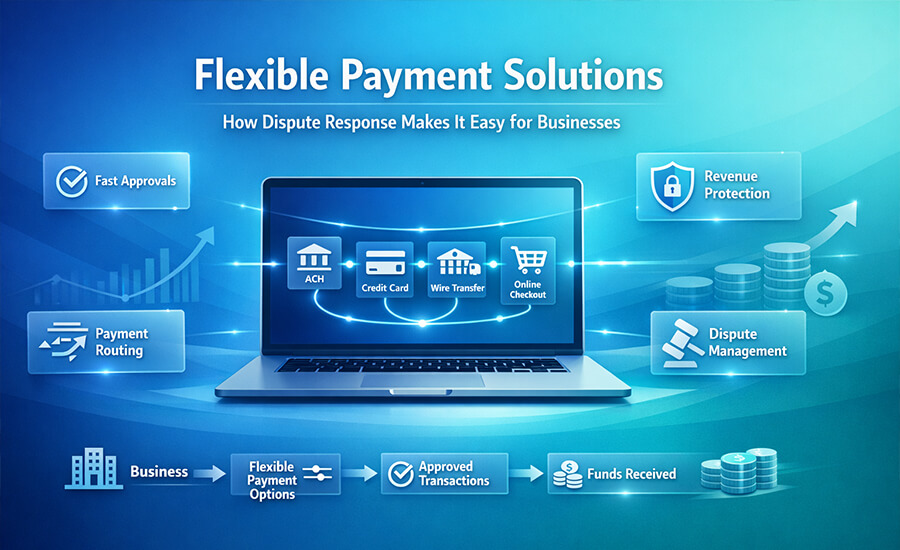
In today’s fast‑moving digital economy, “flexible payment” is no longer a luxury — it’s an expectation. Customers want multiple ways to pay, clear billing, and easy refunds. For businesses, flexible payment options help boost conversion, reduce cart abandonment, and improve customer satisfaction. Dispute Response helps merchants implement flexible payment strategies while staying compliant and reducing disputes.
What Are Flexible Payments?
Flexible payments give customers options to pay how and when they prefer. This can include:
- Multiple payment methods (credit card, debit card, UPI, digital wallets, BNPL, etc.).
- Recurring or installment billing.
- Partial authorizations or split payments.
- Easy refunds, cancellations, and billing changes.
The goal is to let the customer control the experience, not the merchant. When customers feel in control, they are more likely to complete purchases and come back for more.
Dispute Response supports flexible payment by helping merchants manage risk, prevent chargebacks, and respond quickly to disputes — so your business can stay flexible without sacrificing stability.
Why Flexible Payment Matters
Flexible payment is important for several reasons:
1. Higher Conversion Rates
When customers can choose their preferred payment method or payment plan, they are more likely to complete the purchase. Every extra option removes friction and can translate into more sales.
2. Better Customer Retention
Flexible billing — such as subscriptions, installment plans, or easy refunds — builds trust. Customers feel comfortable committing to long‑term value because they know things like refunds, pauses, or changes are possible.
3. Lower Cart Abandonment
Complicated or rigid checkout processes are a major reason for cart abandonment. Flexible payment options simplify checkout and make the purchase feel smoother.
4. Stronger Brand Image
A business that supports flexible payment appears modern, customer‑centric, and adaptable. That builds brand loyalty and differentiates you from competitors that still use rigid payment models.
Dispute Response helps protect that flexible model by making sure each payment option is used responsibly and that disputes are handled quickly and professionally.
Types of Flexible Payment Models
There are several ways flexible payment can work in practice. Here are the most common:
1. Multiple Payment Methods
Let customers pay via credit card, debit card, UPI, digital wallets, or buy‑now‑pay‑later (BNPL) providers. This is especially useful for e‑commerce and SaaS businesses.
Tips:
- Use a single payment gateway that supports many methods.
- Keep the checkout simple and fast.
- Display accepted payment options clearly on the product page.
2. Recurring and Subscription Billing
Flexible recurring billing lets customers sign up for monthly, annual, or usage‑based plans. They can upgrade, downgrade, or pause their subscription as needed.
Tips:
- Use clear billing descriptors.
- Send renewal reminders.
- Make it easy to cancel or change plans.
Dispute Response can help you track recurring transactions and respond quickly if a customer disputes a renewal.
3. Installments and BNPL
Installment plans and BNPL services let customers split large purchases into smaller, manageable payments. This drives more sales in high‑ticket categories such as electronics, travel, or education.
Tips:
- Be transparent about interest, fees, and terms.
- Avoid misleading marketing.
- Monitor for misuse or fraud.
When disputes arise, Dispute Response gives you the tools and documentation support to defend valid charges.
4. Partial Authorizations and Split Payments
Some businesses allow customers to pay part of the bill upfront and the rest later, or split a large payment across multiple cards or methods. This is useful for events, travel, and services.
Tips:
- Clearly explain the split before approval.
- Keep records of each authorization.
- Use secure payment fields or APIs.
Dispute Response helps by organizing transaction data and proof so you can respond quickly if a partial payment is disputed.
5. Easy Refunds and Cancellations
Flexible refunds are a key part of a flexible payment strategy. Customers feel safer buying when they know they can cancel or get a refund if needed.
Tips:
- Publish a clear refund and cancellation policy.
- Offer refunds within a reasonable timeframe.
- Make it easy to request a refund online.
Dispute Response can help you track refund patterns and prevent customers from abusing the system while still honoring legitimate claims.
How Dispute Response Supports Flexible Payment
Flexible payment is powerful, but it also increases the risk of chargebacks and disputes if not managed carefully. Dispute Response helps merchants:
- Monitor transactions and detect suspicious or high‑risk activity.
- Gather and store evidence for disputes (receipts, emails, authorization records).
- Respond quickly to disputes with strong, well‑documented cases.
- Reduce chargeback ratios and protect your merchant account.
By using Dispute Response, you can offer flexible payment options confidently, knowing that your business is protected if disputes arise.
Best Practices for Implementing Flexible Payment
To implement flexible payment successfully, follow these best practices:
- Choose a payment gateway that supports many methods and is easy to integrate.
- Keep your website and checkout simple, fast, and mobile‑friendly.
- Use clear language for pricing, billing, and refunds.
- Train your team on flexible payment features and dispute handling.
- Use Dispute Response to monitor and respond to disputes quickly.
Final Thoughts
Flexible payment is a powerful way to grow your business and improve the customer experience. By offering multiple payment methods, recurring billing, installments, and easy refunds, you make it easier for customers to buy and stay loyal. With Dispute Response, you can keep that flexibility safe, compliant, and dispute‑ready.