Chargeback Management Services - Dispute Response Mar/ 20/ 2026 | 0
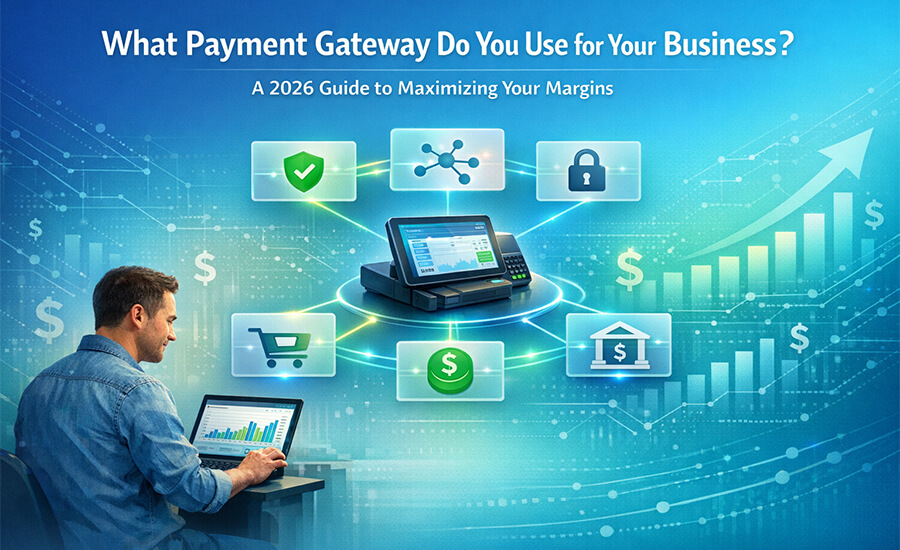
In the fast-paced landscape of 2026, USA-based businesses know that customers expect instant, secure, and frictionless checkout experiences. Whether you operate a bustling brick-and-mortar retail shop or a thriving e-commerce store, choosing the right platform for your small business payment processing is one of the most critical decisions you will make. It goes far beyond simply accepting credit cards; your choice directly impacts your conversion rates, customer trust, fraud prevention, and overall cash flow.
But with so many options on the market, how do you evaluate what payment gateway you should use? To make an informed decision, you need to look past the marketing pitches and understand the true mechanics of payment processing.
Understanding the True Cost of Processing Credit card processing fees can often feel like a maze. To find the most cost-effective solution, it is essential to understand that these fees are generally made up of three components: interchange fees set by card networks, assessment fees, and the processor’s fixed markup.
When evaluating providers for your small business payment processing, you will typically encounter two primary pricing models:
- Flat-Rate Pricing: This model charges a single, predictable rate (e.g., a set percentage plus a few cents) for every transaction, regardless of the card type used. While it is simple to understand and great for predictability, it is not always the most cost-effective, as providers often set this rate high enough to cover their own margins on lower-risk transactions.
- Interchange-Plus Pricing: This model passes the true wholesale cost of the transaction directly to you, adding a transparent, fixed markup on top. Because most everyday consumers use standard, low-fee credit cards rather than premium rewards cards, interchange-plus pricing often results in lower overall transaction costs as your business scales.
Key Features to Look For in a Modern Gateway Selecting a payment gateway is about aligning the platform’s capabilities with your specific business model. Here are the crucial features to prioritize:
- Omnichannel Capabilities: If you sell both online and in-person, you need a system that seamlessly unifies your inventory, sales data, and customer profiles across all channels.
- Flexible Payment Methods: Consumers expect variety. Ensure your gateway supports everything from standard credit and debit cards to ACH payments, Buy Now, Pay Later (BNPL) services, and contactless digital wallets.
- Recurring Billing: For subscription-based models, the ability to automate recurring charges, handle prorated billing, and securely store customer payment details without friction is absolutely vital.
Prioritizing Security and Compliance In 2026, security is no longer just an IT concern—it is a core component of your brand’s reputation. Your chosen gateway must offer robust, Payment Card Industry Data Security Standard (PCI DSS) compliant infrastructure.
Look for gateways that utilize tokenization and end-to-end encryption. Tokenization substitutes sensitive card data with meaningless placeholder data (a “token”), ensuring that even if your systems are breached, hackers gain nothing of value. Additionally, modern gateways employ AI-based fraud detection to reduce false transaction declines and optimize approval rates.
The Hidden Challenge: Managing Disputes and Chargebacks No matter how perfectly you optimize your small business payment processing setup, there is one operational hurdle every business eventually faces: transaction disputes and chargebacks.
When a customer disputes a charge, the funds are often immediately pulled from your account, and your gateway will typically assess an additional penalty fee. Dealing with chargebacks requires navigating complex documentation, maintaining access to dispute tools, and spending valuable administrative time arguing your case. For a growing small business, an influx of chargebacks can severely disrupt cash flow and consume resources that should be spent on growth and customer acquisition.
How “Dispute Response” Can Protect Your Bottom Line Choosing the perfect payment gateway is only the first half of the equation; protecting the revenue that flows through it is the second. This is where Dispute Response becomes your ultimate operational partner.
At Dispute Response, we understand the unique challenges USA small businesses face when navigating the complex world of payment processing. We know that chargebacks are an unavoidable reality of commerce, but they do not have to be a permanent loss. Our dedicated team specializes in expertly managing, fighting, and winning transaction disputes on your behalf.
By partnering with Dispute Response, you can confidently select the payment gateway that offers the best rates and features for your business, knowing that our experts are standing by to protect your hard-earned revenue from unfair chargebacks. We seamlessly integrate into your workflow, allowing you to focus on delivering exceptional value to your customers while we handle the heavy lifting of dispute resolution.
Optimize your gateway for growth, and let Dispute Response secure your success.