Chargeback Management Services - Dispute Response Dec/ 19/ 2025 | 0
In the fast-paced world of digital commerce, encountering a suspicious charge on your financial statement is unfortunately common. Whether you’re dealing with a simple billing error or a serious case of unauthorized activity, knowing how to file a payment dispute efficiently and effectively is crucial to protecting your finances. At Dispute Response, we understand that navigating these complex processes can be frustrating, especially when deadlines are tight. This guide outlines the steps you need to take to dispute a charge successfully and ensure you secure the rights granted to you under U.S. consumer laws.
The Critical First Step: Credit Card vs. Debit Card Protection
Before initiating a dispute, it is vital to understand the difference in protection offered by the payment method you used, as this dictates the federal regulations that apply and your maximum financial risk.
If you used a credit card, your transaction falls under Regulation Z and the Fair Credit Billing Act (FCBA). The FCBA provides robust protection, limiting your liability for unauthorized credit card use to a maximum of $50, provided you report the incident in a timely manner. Crucially, most credit card companies extend this protection further, offering zero-fraud liability, meaning you often won’t be held responsible for a single cent of fraud dispute charges. Furthermore, under the FCBA, you have the right to withhold payment for the disputed amount while the investigation is underway.
If you used a debit card, your transaction is governed by Regulation E, which covers electronic fund transfers (EFTs). Because debit cards draw funds directly from your bank account, you are immediately without the disputed amount until the issue is resolved. Your liability for unauthorized transactions is tiered based on how quickly you report the issue:
- If reported within two business days, your maximum loss is limited to $50.
- If reported after two business days but within 60 calendar days, your maximum loss can be up to $500.
- If reported after 60 calendar days of the statement being sent, you could face unlimited liability for the loss.
For this reason, experts recommend using a credit card for online purchases, as it provides an extra layer of security that debit cards lack.
When Should You File a Dispute?
A formal dispute, often initiated as a chargeback, should be reserved for specific scenarios where you cannot resolve the issue directly with the merchant. The grounds for a dispute often involve a failure on the merchant’s end or genuine fraud.
Reasons to file a dispute include:
- Billing Errors: Charges that list the wrong date or amount, mathematical errors, or failure by your card company to accurately credit a payment.
- Unauthorized Charges: Seeing a charge you did not make, which alerts you to the possibility of identity theft or fraud dispute.
- Non-Receipt of Goods or Services: You never received the item you paid for, or the item received was significantly different from the description.
- Failed Refund: The merchant refused to issue a refund after you returned an item or canceled a service.
Navigating the Crucial Time Limits
Understanding the deadlines is perhaps the most confusing—and most critical—part of the dispute process. Deadlines are hard, non-standardized limits set by card networks and individual banks.
In general, cardholders typically have a generous window of up to 120 days from the transaction or expected delivery date to initiate a chargeback. However, if your dispute concerns a billing error and you want the full protection offered by the FCBA, you must file the request with your credit card issuer within 60 days of receiving the bill that includes the error.
If you are dealing with a fraud dispute related to unauthorized charges on your credit card, while federal law may allow for more time, acting immediately is essential to ensure maximum protection and a $0 liability.
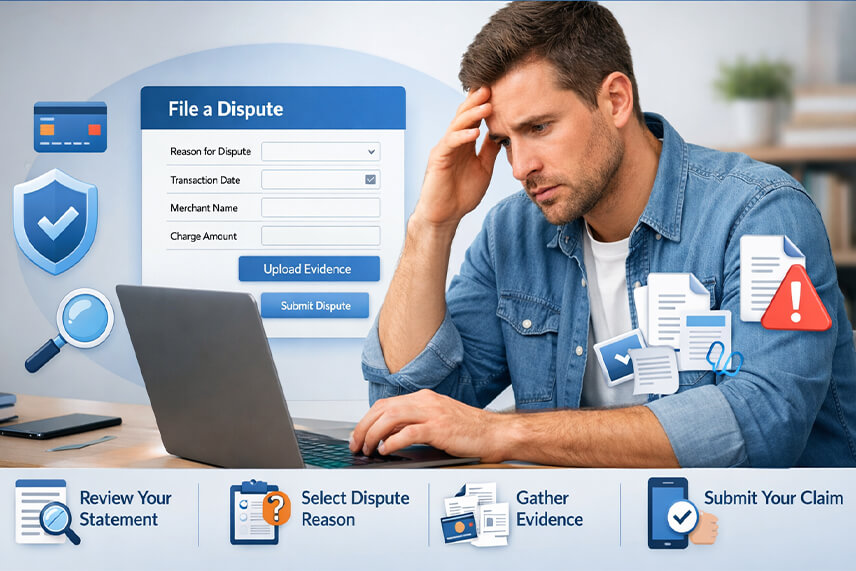
Step-by-Step Guide to Filing Your Dispute
Step 1: Attempt to Resolve with the Merchant
First, always try to work out the issue directly with the seller. Your card issuer may require proof that you attempted to contact the business before they proceed with the formal dispute. If the merchant cannot or will not resolve the issue, proceed to the next step.
Step 2: Contact Your Financial Institution Immediately
If you suspect fraud, contact your credit card company or bank immediately by calling the customer service number on the back of your card or via your online account.
To initiate a formal credit card dispute for billing errors or purchase issues:
- File the Request: You can file a dispute online, via the phone, or by mail.
- Follow Up in Writing: To ensure you receive the full protection under the FCBA, you should send a follow-up letter by traditional mail to your credit card issuer’s billing inquiries department.
- Include Documentation: Send copies of supporting evidence like receipts, emails with the merchant, invoices, or delivery confirmations, and keep a copy of your letter for your records.
- Adhere to the 60-Day Window: Ensure your written notice reaches the creditor no later than 60 days after the statement reflecting the error was transmitted.
Once you file a dispute, your credit card company must acknowledge the request within 30 days and resolve the issue within 90 days of receiving your written letter, under federal law.
Let Dispute Response Handle the Complexity
Disputing a charge requires swift action, detailed documentation, and a clear understanding of shifting deadlines and regulatory nuances. Missing a deadline, particularly with debit transactions, means automatically losing the case and forfeiting the protection you are owed.
At Dispute Response, we specialize in helping consumers navigate the complexities of financial disputes, ensuring your claims are filed accurately and on time to maximize your chance of a favorable outcome. Don’t risk losing revenue—or worse, facing unnecessary liability for a fraud dispute.
Contact Dispute Response today to learn more about protecting your financial power and ensuring your disputes are handled correctly.