Chargeback Management Services - Dispute Response Mar/ 3/ 2026 | 0
If you are operating a business in the USA, effectively managing your cash flow is one of your most critical responsibilities. Whether you are running payroll, collecting monthly subscriptions from customers, or paying your vendors, electronic bank-to-bank transfers are likely the lifeblood of your operations. Understanding the exact mechanics of ach processing is essential for maintaining a healthy bottom line. One of the most common questions business owners and finance teams ask is: What is the exact funds settlement period for ACH transactions?
In this comprehensive guide brought to you by Dispute Response, we will break down everything you need to know about ACH settlement times, what factors influence these timelines, and how you can optimize your payment strategies to avoid costly delays.
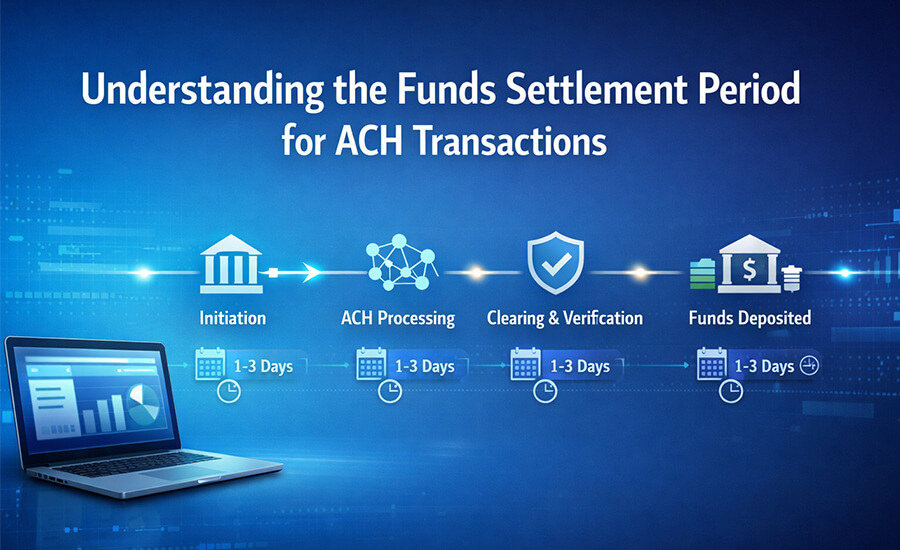
The Short Answer: How Long Does It Take? The general industry standard is that standard ACH transfers take one to three business days to fully process and settle. However, the network is much faster and more efficient than its reputation might suggest. In reality, approximately 80% of all ACH transactions settle within just one business day or less.
Unlike real-time wire transfers, ACH payments do not move instantly; instead, they are accumulated by financial institutions and processed in large batches at scheduled intervals throughout the day. This batch processing model is exactly what keeps the costs so low for businesses, but it also creates a slight delay between the moment you hit “send” and the moment the funds officially arrive.
Breaking Down Standard ACH Timelines To truly understand your settlement period, it helps to know the difference between the two primary types of ACH transactions: debits and credits.
- ACH Debits (Pulling Funds): An ACH debit occurs when you request to pull funds from a customer’s account, such as an automatic monthly utility bill or subscription payment. By network rules, ACH debit transactions are required to be processed and settle no later than the next business day.
- ACH Credits (Pushing Funds): An ACH credit is a “push” transaction where you send money out of your account to a recipient, like a direct deposit for employee payroll. Senders can choose to have ACH credits settle on the same day, the next business day, or within two business days.
While the funds may move quickly between the banks, it is important to note that payment processors may enforce their own holding or settlement periods before officially depositing the funds into your business account. Depending on your business’s risk profile, transaction type, or your processor’s specific underwriting policies, standard settlement can sometimes be extended to take up to 6 business days.
Same-Day ACH: The Faster Alternative If your business needs funds to move urgently, Same-Day ACH is an enhanced service that allows transactions to settle on the exact same business day they are initiated. This service processes payments through multiple clearing windows throughout the day, often settling funds within just a few hours.
To take advantage of this speed, you must submit your transaction before specific daily cutoff times, which generally fall at 10:30 a.m., 2:45 p.m., and 4:45 p.m. Eastern Time. If you meet these deadlines, funds are typically delivered and made available by the end of that same business day. Keep in mind that Same-Day ACH carries a per-transaction limit of $1 million and is only available for domestic US transfers.
What Can Delay Your Settlement? Even with an efficient system, several variables can slow down your funds:
- Weekends and Holidays: The ACH network only operates on official business days. Weekends and federal bank holidays are complete dead zones. If you initiate a transfer on a Friday afternoon, the processing clock will not officially start until Monday, meaning your funds may not land until Tuesday.
- Missing Cutoff Times: Because transactions are processed in batches, initiating a transfer late in the afternoon means it will likely miss the final batch of the day, rolling your processing over to the next morning.
- Errors and Returns: If an account number is mistyped, an account is closed, or a customer has insufficient funds, the transaction will bounce back as a return. Resolving these errors requires you to fix the problem and restart the transfer, which can easily add two to five extra days to your timeline.
How Dispute Response Can Protect Your Cash Flow A predictable settlement period is great, but what happens when a customer disputes a transaction after the funds have cleared? Similar to paper checks, ACH transactions can be reversed or returned automatically by a receiving bank. When exceptions, returns, or unauthorized transaction claims occur, it disrupts your cash flow and demands immediate administrative attention.
This is exactly where Dispute Response steps in to protect your business. We specialize in helping US businesses navigate the complex world of payment disputes and risk management. If your business faces chargebacks, contested ACH payments, or fraudulent returns, Dispute Response provides the expertise and tools necessary to resolve these issues swiftly. We handle the heavy lifting of dispute resolution so that your funds stay where they belong—in your bank account.
Conclusion Knowing the timeline for your ACH payments empowers you to forecast cash flow with confidence. By initiating your transfers early in the day, avoiding weekends, and double-checking customer data, you can ensure your transactions settle as fast as possible. And whenever payment challenges or disputes arise, you can rely on Dispute Response to safeguard your hard-earned revenue.